
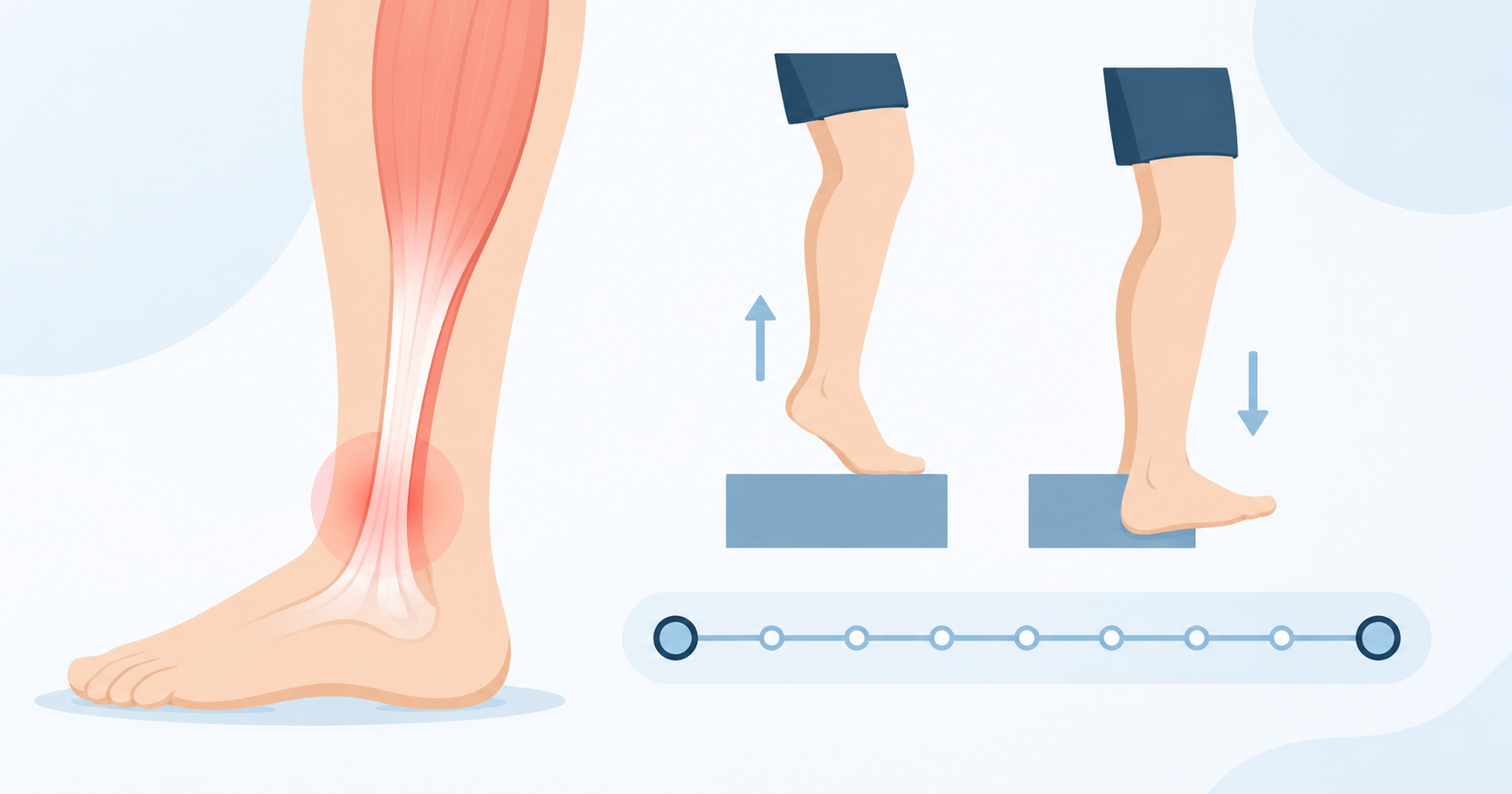
The Achilles tendon connects your calf muscles to your heel bone. Achilles tendinopathy is an overuse problem involving this tendon. It often causes pain, stiffness and reduced tolerance for walking, running, jumping or hills. It is common in runners and active people, but it can also affect people who suddenly increase activity after a quieter period.
Many people describe a sore or stiff tendon first thing in the morning, pain when pushing off, and tenderness a few centimetres above the heel or at the tendon insertion. Unlike a sudden tear, tendinopathy usually builds up over time.
Common signs of Achilles tendinopathy
- Pain or stiffness in the back of the ankle, especially in the morning
- Pain that warms up a little with activity, then flares afterwards
- Tenderness or thickening in the tendon
- Pain with calf raises, running, jumping or walking uphill
Why does it happen?
Achilles tendinopathy is often related to a tendon being asked to do more than it is ready for. Common contributors include:
- A recent increase in running, walking, jumping, sport or gym work
- Hill running, sprinting or lots of stop-start activity
- Reduced calf strength or ankle mobility
- A return to exercise after time off
- Footwear changes or training on harder surfaces
How is it managed?
Management usually focuses on calming the tendon down, improving its load tolerance and building back strength. The right plan depends on where the pain is, how long it has been there and what activities you want to return to.
Common management options may include:
- Load management: temporarily reducing aggravating activity rather than pushing through a flare
- Strengthening and rehabilitation: especially calf loading exercises
- Footwear advice: supportive shoes can reduce strain in some cases
- Heel lifts or taping: sometimes used short term to ease symptoms
- Orthotic advice: if foot mechanics or footwear are part of the picture
- Shockwave or other adjuncts: considered in selected persistent cases
- Gradual return to sport: building back into running, hills and plyometrics over time
Imaging is not always needed. Many cases can be diagnosed clinically, although scans are sometimes helpful if symptoms are persistent or the diagnosis is unclear.
What is the Alfredson protocol?
The Alfredson protocol is a well-known exercise program for mid-portion Achilles tendinopathy. It is based on eccentric calf loading, meaning the tendon works while the heel is being lowered down.
The classic version includes two exercises:
- Straight-knee heel drops to target the gastrocnemius
- Bent-knee heel drops to place more emphasis on the soleus
The traditional program is:
- 3 sets of 15 repetitions with the knee straight
- 3 sets of 15 repetitions with the knee bent
- Performed twice daily
- Continued for 12 weeks
In the classic method, you rise up using both feet, transfer weight onto the sore side, then lower the heel down slowly on the affected side. Some discomfort during the exercise can be acceptable, but pain should remain tolerable and should not be significantly worse the following day.
Important: if your pain is right at the heel bone insertion, dropping the heel below step level may irritate the area more. In those cases, the program often needs to be modified. A podiatry assessment can help identify which version is most appropriate.
A 12-week timeline: what rehab often looks like
Weeks 1 to 2: settle symptoms and learn the movement
The focus is on reducing aggravating load, improving confidence with the exercise and building consistency. You may need to cut back running, hills or jumping temporarily. Technique matters more than speed.
- Start the heel-drop program with good control
- Use a handrail or wall for balance if needed
- Monitor morning stiffness and next-day soreness
Weeks 3 to 4: build routine
By this stage, many people are becoming more comfortable with the exercise volume. Symptoms may still be present, but day-to-day irritability should begin to settle.
- Aim for regular completion of both straight-knee and bent-knee sets
- Keep walking and activity within a manageable range
- Review footwear if flat or unsupportive shoes are making symptoms worse
Weeks 5 to 8: add load if it is becoming too easy
If pain is settling and the exercises feel easier, resistance can often be increased. This is commonly done by adding weight in a backpack or holding dumbbells.
- Progress load gradually, not all at once
- Continue monitoring symptoms the next morning
- Begin a staged return to higher-level activity if appropriate
Weeks 9 to 12: improve strength and prepare for return to sport
The tendon should now be tolerating more load. Rehab often expands beyond the classic protocol to include heavier calf strengthening, single-leg control and a return-to-running or sport plan.
- Continue progressive calf loading
- Add functional strengthening and balance work where needed
- Reintroduce hills, faster running or jumping gradually
When should I seek help?
Book an assessment if pain has been lingering for more than a couple of weeks, if it keeps returning, or if you are unsure what type of exercise is safe. You should also seek urgent medical attention if you felt a sudden snap, have marked swelling or bruising, or cannot push up onto your toes, as this may suggest a more serious injury.
How a podiatrist can help
A podiatrist can assess the tendon, identify contributing factors and guide a step-by-step rehab plan. This may include exercise prescription, load advice, footwear recommendations and a return-to-activity plan tailored to your goals.
If your pain is linked with running, sport or training load, see our sports podiatry page. For gait or movement concerns, you can also read about gait and movement assessments.