
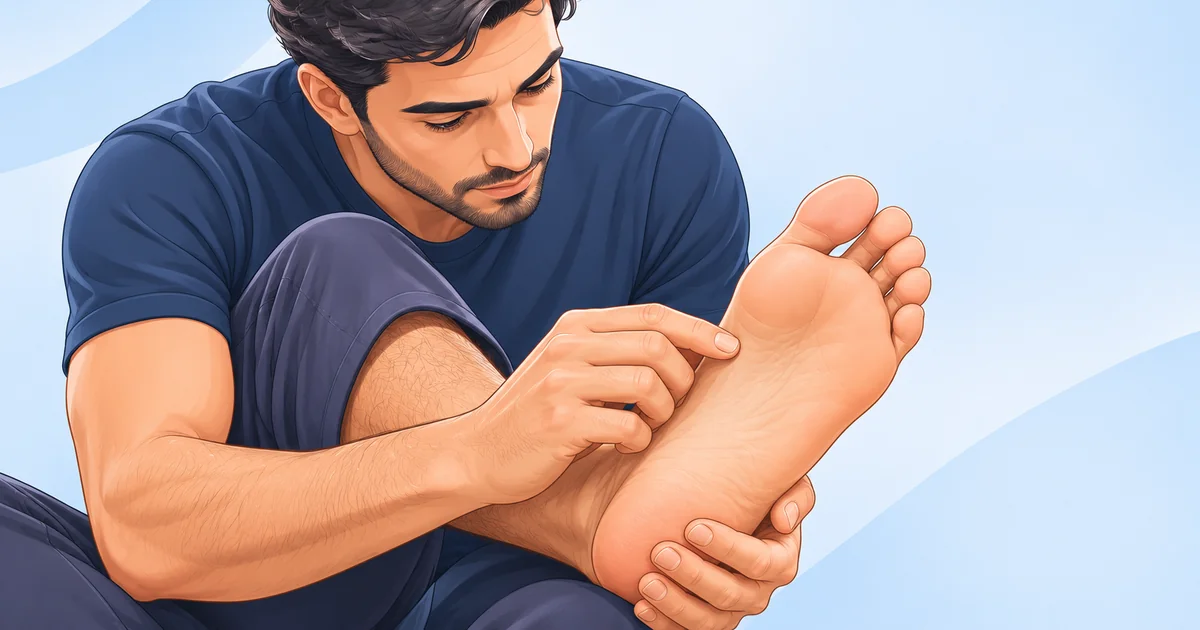
Where should I look?
In good light, check the tops and soles of both feet, the heels, around the nails and between the toes. Use a mirror or ask someone to help if the soles are hard to see. Look for blisters, cracks, cuts, drainage, new redness or a change in colour or shape. Compare feet if one looks more swollen or feels warmer than the other.
Check inside your shoes before putting them on. A small stone, a rough seam or a folded sock can cause rubbing you may not feel. If you have reduced sensation or poor circulation, ask your foot care team how to manage thick nails or callus safely.
What needs same-day advice?
Contact your GP, podiatrist or diabetes foot service the same day if you notice a new blister, cut, open sore or drainage. A foot that suddenly becomes hot, red or swollen also needs urgent same-day assessment, even if the skin is intact and there is little pain. Keep weight off that foot while arranging assessment. Go to an emergency department if redness is spreading rapidly, the foot becomes black or blue, or you feel very unwell.
What does a podiatry foot check add?
A foot assessment can check sensation and circulation and look for pressure areas you may not notice at home. The results, together with your history of ulcers or other foot problems, help determine how often you need professional checks.
Related clinic service Diabetes foot care.