
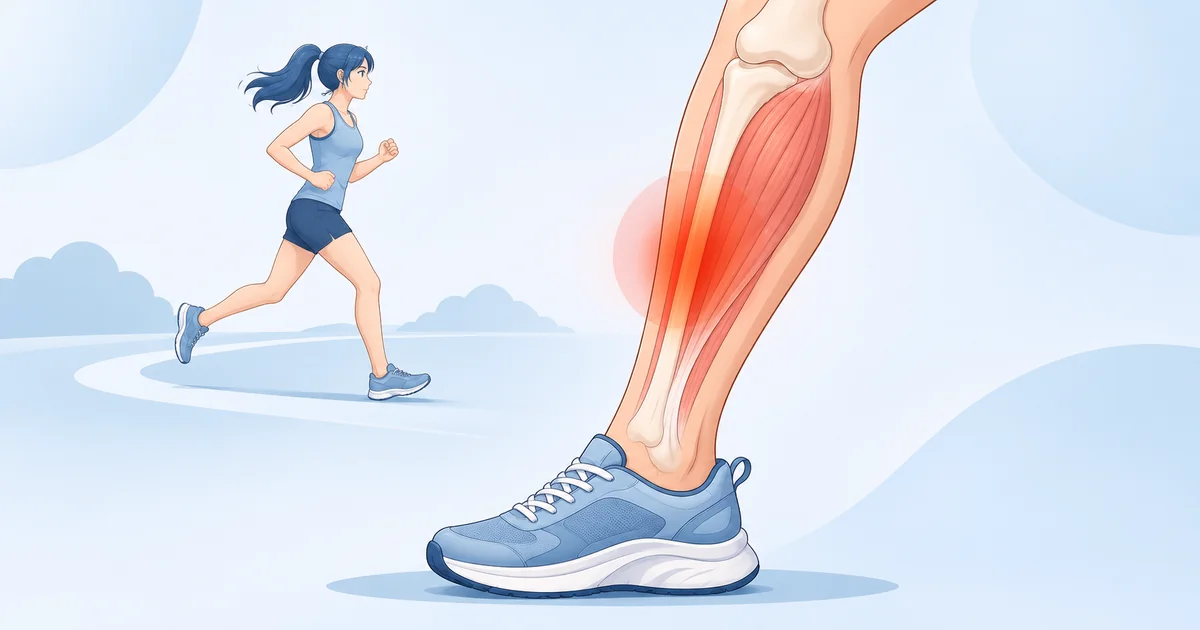
What do shin splints feel like?
Medial tibial stress syndrome, often called shin splints, can feel like an ache along a broader area on the inner edge of the shin. You might notice it during running, after training or when pressing along the inside of the shin. A change in distance, speed or frequency can leave less time to recover between sessions.
When could shin pain be something else?
Pain you can point to with one finger over the bone, pain that starts earlier each run, or pain with ordinary walking or at rest should be assessed promptly. A bone stress injury is one possibility. Pause running and jumping until you’ve been assessed. Repeated tightness, tingling or weakness that comes on during exercise also needs assessment because several conditions can cause shin pain.
What should I change first?
Reduce the activities that reproduce the pain. If everyday walking is comfortable and there are no signs that need prompt assessment, consider a lower-impact activity such as easy cycling if it stays pain-free. When returning to running, start with an easier effort on flat ground and change one thing at a time, such as duration before pace. Notice how the shin feels that day and the next morning.
Bring your running shoes and a recent training log to an assessment if symptoms keep returning. Changes in training are often easier to spot when you look at the past few weeks together.
Related clinic service Sports podiatry.