
What clues should I look for?
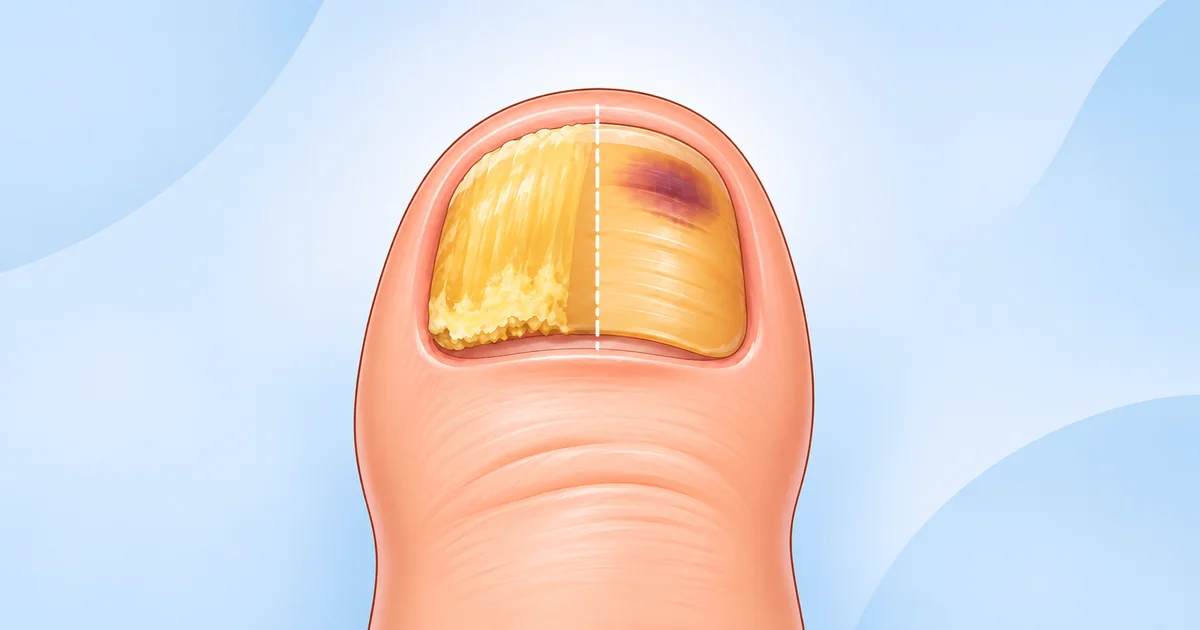
A fungal nail can become yellow or white, crumble at the edges or lift from the nail bed. Athlete’s foot can occur at the same time. Repeated shoe pressure can also lead to thickening or lifting, especially if the affected toe repeatedly hits the front of the shoe. Nail changes after a knock can take months to grow out. Skin conditions such as psoriasis can change the appearance of the nails too.
Why might I need a nail sample?
A clinician may collect a clipping or debris from the nail to look for fungus if the diagnosis is uncertain or before you start certain treatments. This matters because antifungal treatment can take months, and oral medicines can have side effects or interact with other medicines. If thickness makes the nail uncomfortable in shoes, a podiatrist can assess whether reducing the thickness or changing shoe fit may help with pressure.
When should I get it checked sooner?
Seek prompt advice if the skin around the nail becomes painful, hot or red, or there is pus. A new unexplained dark streak, especially if it widens or the pigment reaches the surrounding skin, should be checked promptly by a GP. If you have diabetes, reduced sensation or poor circulation, seek advice before filing or cutting a thick nail yourself, and get same-day advice for a break in the skin.
Related clinic service Fungal nails and skin.