
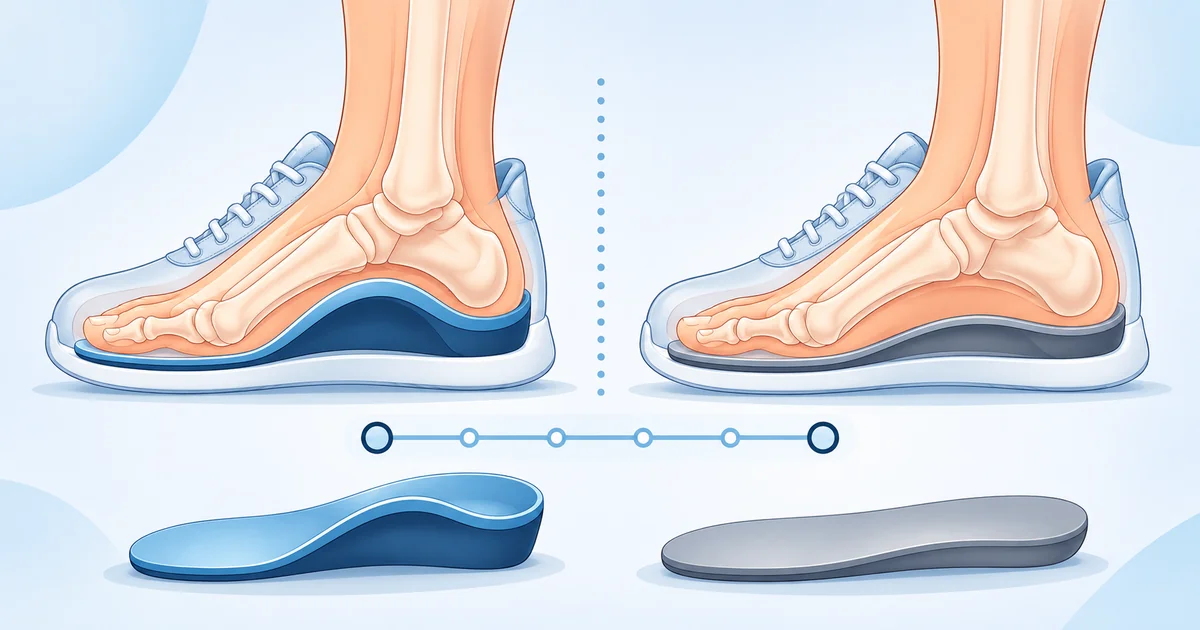
What’s the difference?
Off-the-shelf orthotics come in standard sizes and shapes. Some are cushioned, while others have a firmer shape through the arch. A custom orthosis is made to a prescription based on your assessment and foot shape. It can be designed to fit a particular shoe or change pressure in a specific area.
For some people with plantar fasciitis, a comfortable prefabricated insert is a reasonable option to try. The clinical guideline supports using either type alongside other treatments when appropriate. It advises against using either type alone for short-term pain relief.
When might custom orthotics be considered?
A clinician might discuss a custom device if standard options are uncomfortable or won’t fit your foot or footwear, or if there is a specific pressure area to accommodate. The decision depends on what the device is meant to achieve. Someone who needs to stand through a full shift may have different priorities from someone trying to get back to running.
If pain is sharpest when you first stand after rest, read our guide to morning heel pain. Pain at the back of the heel, pain after an injury or tingling under the foot may call for a different assessment.
What should I bring to an assessment?
Bring the shoes you spend the most time in, any existing inserts and a short description of when your symptoms start. A clinician can discuss whether footwear changes, exercises, changes to activity or an insert fit your situation. If an insert is trialled, agree on what you’ll use to judge it, such as how long you can comfortably stand or walk.
Related clinic service Custom foot orthotics.