
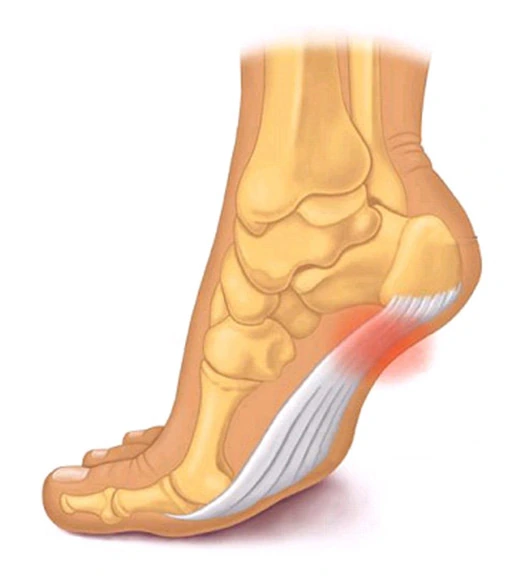
If you feel a sharp pain under your heel as soon as you get out of bed, then find it eases after a few minutes of walking, plantar fasciitis is one possible cause. You might notice the same pain when you stand after sitting for a while, or find it comes back after a long shift on your feet. Where you feel it and how it behaves through the day can help narrow down the cause.
What does first-step heel pain feel like?
With plantar fasciitis, pain is usually felt underneath the heel, often towards the inside edge where the plantar fascia attaches. The plantar fascia is a strong band of tissue that runs along the sole of your foot. The first few steps after a rest can be uncomfortable because the sore area is taking weight again. A recent increase in running, a change in footwear or more time standing than usual can be relevant.
Pain at the back of the heel, near where the tendon meets the heel bone, may point towards an Achilles tendon problem. Pain that feels like a deep bruise in the centre of the heel can have a different cause again. If you’re unsure which pattern fits, see our heel pain guide or read about Achilles tendinopathy if your symptoms are mainly at the back of the heel.
What can I try at home?
Start by putting comfortable, supportive shoes beside the bed and trying them for your first steps, especially if walking barefoot on hard floors makes the pain worse. If a recent increase in running, walking or standing seems to have brought it on, ease back on the activity that aggravates it. If your heel is noticeably worse the next morning, that can be a sign to reduce the duration or intensity further.
Gentle calf and plantar fascia stretches may help. For a plantar fascia stretch, sit down, cross the sore foot over your other leg and gently draw your toes back until you feel a light stretch along the arch. Stop if it causes sharp pain. If symptoms started after an injury or you’re having difficulty taking weight on the foot, seek assessment before starting exercises.
Do I need custom orthotics or a scan?
Many people can start with changes to activity and footwear, plus exercises suited to their symptoms. A podiatrist can assess the location of the pain, how your foot and ankle move, and how your footwear fits. Prefabricated insoles or custom foot orthotics may be considered alongside other treatment if extra support is likely to help. Imaging may be considered if the symptoms are unusual, there was an injury or another cause is suspected.
When should I get heel pain checked?
Arrange an assessment if the pain keeps coming back, is getting worse or is affecting your walking, work or training. Seek urgent medical care if you can’t bear weight after an injury or if the heel is red, hot and swollen and you have a fever or feel unwell. If you have diabetes and notice a new wound, blister or a hot, swollen foot, seek prompt medical assessment even if it feels painless.
If morning heel pain is interfering with your day, you can book a podiatry assessment at Western Sydney Foot Clinic, 19 Maryvale Avenue, Liverpool NSW. Bring the shoes you wear most often and, if you can, note what changed around the time your symptoms started.
Further reading
Healthdirect Australia – Plantar fasciitis